AI and the brain: similar scale, different design—and useful lessons
New AI designs such as mixture-of-experts can activate only the most relevant parts of a model for each task, echoing how the human brain recruits specialised regions. The comparison offers practical insights for building more efficient, capable systems.
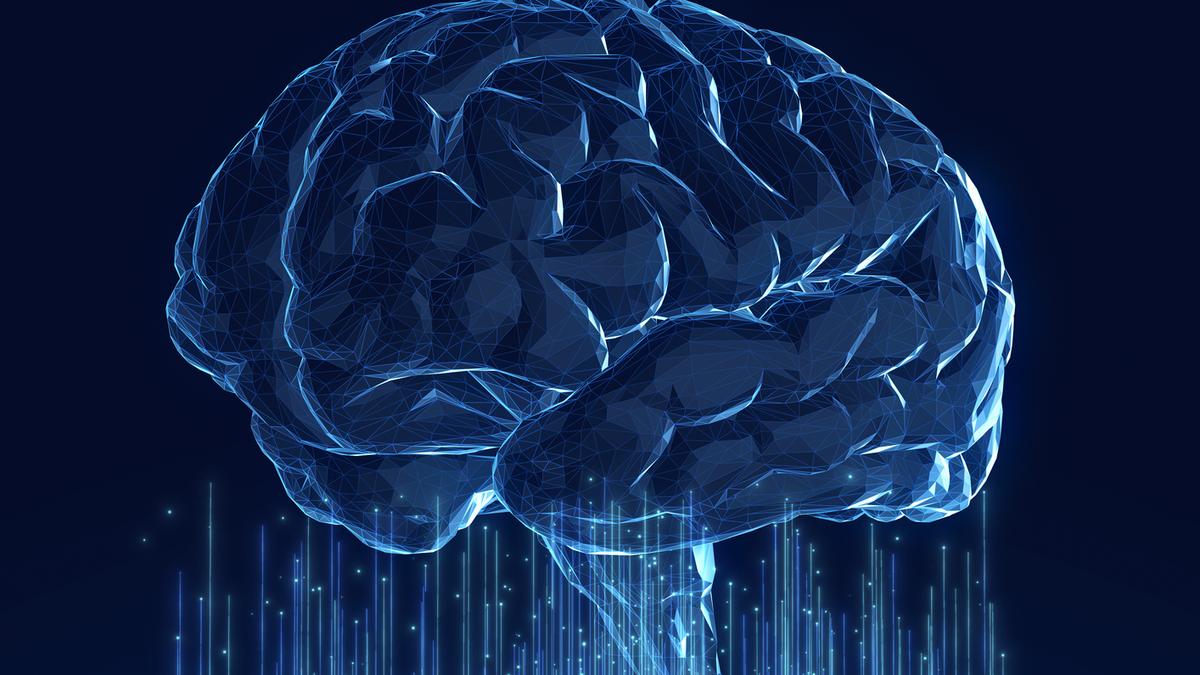
AI research often draws inspiration from biology, but the most interesting comparisons are the careful ones. A recent discussion highlighted how modern AI systems can be similar to the human brain in overall scale, yet fundamentally different in how they are built and how they operate. The takeaway is constructive: understanding these differences can help engineers design AI that is more efficient and dependable.
Similar in scale, not in construction When people compare AI to the brain, they sometimes focus on the sheer size of modern models—vast networks with many parameters and layers. At that broad level, the analogy can be intuitive: both are large systems capable of complex behaviour.
However, “large” does not mean “the same”. The brain is a living biological system shaped by evolution, chemical signalling and continuous learning from the environment. Today’s AI models are engineered mathematical structures trained on data using optimisation techniques. Both can show impressive performance, but they arrive there via different mechanisms.
This distinction matters because it sets realistic expectations. AI does not “think” in the human sense, and the brain does not operate like a conventional computer program. The comparison is still useful, but only when it is used to ask practical design questions: How can we route tasks to the right components? How can we make computation more selective and energy-aware?
Mixture-of-experts and the brain’s selective recruitment One recent design choice in frontier AI models is the use of *mixture-of-experts* architectures. In simple terms, instead of activating the entire network for every input, the model can route a query to specialised “expert” parts of the network, using only the portions that are most relevant to the task.
This resembles, in a broad conceptual way, how the brain recruits different regions for different activities. When we read, navigate, recall memories or solve a problem, not every part of the brain is equally involved at the same time. The system dynamically engages specialised circuits, often depending on context and experience.
The AI parallel is not a perfect biological copy, but it is a helpful engineering inspiration: selective activation can potentially improve efficiency while preserving capability. For developers, this can mean better performance-per-compute—doing more with the same hardware budget, or achieving the same results with less.
What this could mean for Indian technology For India’s technology ecosystem—spanning startups, enterprise IT and research labs—the practical message is optimistic. As AI architectures become more modular and selective, there is room for innovation in:
- **Efficiency-first AI**: Models that do not need to run “full throttle” for every query can be more accessible to organisations working with constrained computing resources.
- **Specialised applications**: Mixture-of-experts thinking aligns well with India’s diverse needs—language support, sector-specific assistants, and domain tools for agriculture, healthcare, education and public services.
- **Better engineering discipline**: Selective routing encourages clearer evaluation: which expert is used, why it was chosen, and how reliability can be improved through testing and monitoring.
Crucially, comparisons with the brain should not be treated as marketing metaphors. They are most valuable as a design lens—encouraging engineers to build AI systems that are more thoughtful in how they allocate computation, and more transparent in how they behave.
**Why it matters:** As AI scales up, smart design choices such as selective “expert” activation can help make systems more efficient and deployable—supporting wider, more responsible adoption across Indian businesses and public services.
