Technology
40 briefs · reviewed, positive, calm dispatches.


AI-ready phones gain buyer interest, while strong performance stays essential: Report
A new report suggests smartphone buyers are increasingly looking for AI features, such as phones that can understand requests and recommend actions. At the same time, everyday performance remains a core expectation, underlining demand for practical, reliable upgrades.

Education for the AI age: more curiosity, less cramming
As AI reshapes how knowledge is created and used, education in India can shift from adding more syllabus to building stronger foundations: curiosity, critical thinking and the confidence to learn in unfamiliar situations—skills that help graduates stay relevant and hopeful.

Instagram refreshes its wordmark logo with a sharper, modern look
Instagram has updated its wordmark logo for the first time in over a decade. The platform says the refreshed lettering is sharper and more modern, while still keeping the simplicity and familiar cues that users associate with the brand.
Instagram refreshes its wordmark after over a decade, keeping it simple
Instagram has updated its wordmark logo for the first time in over a decade. Head Adam Mosseri said the refreshed design is “sharper and more modern”, while still referencing the original and staying intentionally simple.

Teaching AI to speak India: preserving dialects and widening digital access
Researchers at IIT Madras’ AI4Bharat are travelling across India to record voices and document dialects, helping AI systems better understand Indian languages. The effort aims to make chat, translation and voice tools more inclusive for everyday users.
At IIT Madras, AI4Bharat helps AI understand India’s many languages
AI can only be truly useful at scale when it understands people in their own language. At IIT Madras, AI4Bharat researchers are travelling across India to collect voices, preserve dialects and build language tools that can serve a wider range of Indians.

Motorola launches Moto Pad 70 in India with bundled stylus and 68W charger
Motorola has introduced the Moto Pad 70 with a bundled stylus, aiming to make note-taking and creative work more accessible. The tablet packs a 10,200 mAh battery and ships with a 68W charger in the box, supporting on-the-go productivity.

Why your keyboard’s Shift key is called “Shift”
The Shift key’s name comes from an earlier era of typing, when pressing it physically shifted parts of the mechanism to access alternative characters. Today it remains a small, familiar tool that makes typing faster, clearer, and more versatile.
Why the Shift key is called ‘Shift’ — and how it shaped modern typing
The Shift key’s name comes from an earlier era of typewriters, where pressing it literally shifted parts of the mechanism to type different characters. Today, it remains a simple, reliable shortcut that makes writing faster and clearer.
Why your keyboard has a ‘Shift’ key: a small history of big letters
The Shift key’s name comes from an older, mechanical idea: shifting parts of a typewriter to access a second set of characters. Today, the key quietly powers quicker typing, cleaner formatting, and smarter shortcuts across devices and software.
Why the Shift key is called ‘Shift’: a small story of keyboard evolution
The Shift key’s name comes from an era when the key physically “shifted” parts of a typewriter to unlock a second set of characters. Today, it remains a simple, helpful shortcut that keeps modern typing fast and flexible.
Why the Shift key is called ‘Shift’: a small story of smart design
The Shift key’s name comes from an earlier era of typewriters, where pressing it physically shifted parts of the machine to type capital letters and symbols. That simple idea lives on in modern keyboards—making typing faster and more versatile.

Helping children use phones safely: practical steps for Indian parents
As smartphones become a normal part of growing up, parents can support children with clear screen-time limits, safer access to social platforms, and regular conversations about online behaviour. A calm, consistent approach helps children build healthy digital habits.

Sony unveils 115-inch Bravia 9II True RGB smart TV for big-screen viewing
Sony has announced a 115-inch Bravia 9II True RGB smart TV, signalling its push into ultra-large screens as India’s smart TV market shifts beyond 55 inches. The company says it continues to lead these larger-size segments.

How floating solar could expand India’s clean energy pipeline
Floating solar plants on reservoirs and lakes are emerging as a practical way to add renewable capacity where land is limited. By pairing generation with existing water infrastructure, India can diversify sites, improve project timelines, and support grid-friendly expansion.
How floating solar could help India scale renewables with less land pressure
As India expands clean energy, floating solar on reservoirs offers a land-sparing path to add capacity while supporting grid needs. With careful design and local coordination, this approach can complement ground-mounted solar and strengthen renewable uptake.

Sarvam AI unveils platform to help build India-centric AI models
Sarvam AI has introduced Epoch Builder Edition, a new platform aimed at supporting the development of India-centric AI models. The company said it will begin a private preview in August 2026, with wider availability planned for Q4 2026.

Foldable phones in India: Are they ready for the mainstream?
Foldable smartphones are moving from fragile showcase gadgets to credible daily drivers. In India, improving durability, better software and wider service support are boosting confidence. The next phase depends on pricing, long-term reliability and clear use-cases beyond novelty.

How social media seems to ‘know’ you: the quiet science of recommendations
That moment when an online ad mirrors a recent search can feel uncanny. In reality, social platforms rely on signals like clicks, watch time and location to predict interests—tools that can be useful when understood and managed thoughtfully.

WhatsApp expands calling with web calls, waiting rooms and call transfer
WhatsApp has rolled out new calling upgrades including web-based calls, waiting rooms and call transfer, bringing its meeting experience closer to dedicated video-call platforms. The additions aim to make everyday collaboration smoother for users across devices.

How social media is reshaping food choices, one scroll at a time
From quick recipes to wellness reels, social media is steadily influencing what we cook, crave and consider “healthy”. Used thoughtfully, it can expand food knowledge, inspire home cooking and support better habits—while reminding us to verify claims and listen to our bodies.
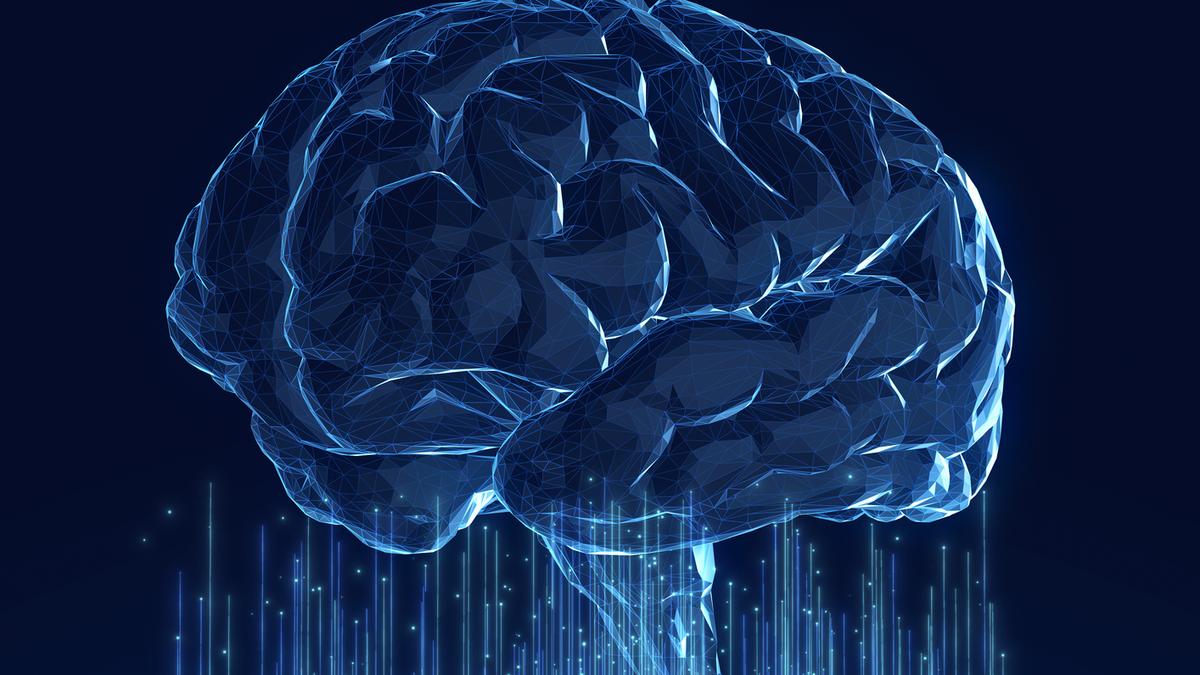
AI and the brain: similar scale, different design—and useful lessons
New AI designs such as mixture-of-experts can activate only the most relevant parts of a model for each task, echoing how the human brain recruits specialised regions. The comparison offers practical insights for building more efficient, capable systems.

Why old landline phones kept working even during power cuts
Traditional landline phones often worked through power cuts because the telephone network supplied its own power to basic handsets. This simple, resilient design offered dependable communication for homes and offices—an idea still influencing today’s emergency-ready connectivity planning.

Screenshots and digital trust: A quiet tool for everyday transparency
In an era of vanishing messages and fast-moving feeds, screenshots remain a simple way to preserve context and accountability. Used thoughtfully, screen-captures can support personal safety, consumer awareness and workplace clarity—while reminding us to handle privacy with care.
In screenshots we trust: a simple tool that protects everyday digital freedom
In an age of disappearing messages and shifting platform rules, screenshots remain a steady, user-controlled way to preserve what we see online. Their simplicity helps people document, verify and share information responsibly—supporting transparency without needing specialised tools.
Why screenshots still feel like the internet’s simplest proof
In an age of disappearing posts, edited messages and AI-generated content, screenshots remain a surprisingly practical tool for everyday clarity. They help people document, explain and resolve issues—while also raising important questions about privacy, context and responsible sharing.
Why screenshots still feel like a small digital freedom
As apps become more controlled and content more fleeting, screenshots remain a simple, user-led way to save, share and verify information. They offer a practical sense of agency—while also reminding us to use digital records responsibly and respectfully.
In screenshots we trust: a small tool shaping digital choice and clarity
From study notes to customer support, screenshots have become a simple, dependable way to record what we see online. Even as apps add privacy features, screen-captures continue to help people keep context, proof and control in everyday digital life.

Lava introduces Virat V1 series for online buyers, partners with Flipkart
Indian smartphone maker Lava has launched the Virat V1 5G and Virat V1 for online customers, partnering with Flipkart for sales. The move strengthens Lava’s digital retail push and widens access to homegrown handset options across India.

On-device AI on smartphones: what’s changing, and why it’s promising
A major shift is under way as artificial intelligence moves from cloud servers to the phone itself. On-device AI can make everyday features quicker, more private and more reliable, while opening fresh opportunities for Indian users and developers.
On-device AI in smartphones: How your phone is learning to do more, locally
Artificial Intelligence is steadily moving from distant cloud servers to your smartphone itself. This shift—called on-device AI—could make everyday features faster, more private and more reliable, marking a major change in smartphones since the rise of apps.
Banking turns to Dynamics and Copilot, with AI governance moving centre-stage
Banks in India and globally are steadily adopting Microsoft Dynamics and Copilot-style assistants to modernise customer service, operations and compliance workflows. Alongside this, AI governance is becoming a practical boardroom priority—helping institutions scale innovation with stronger controls and trust.
AI in India: Practical adoption, responsible innovation and new opportunities
India’s AI story is increasingly about practical value—improving services, boosting productivity and enabling new products across sectors. With a growing talent base, supportive digital public infrastructure and a focus on responsible use, the country is shaping steady, inclusive AI adoption.

Space Exploration Day: How astronauts train for life and work in orbit
Astronauts reach space only after years of careful training that builds skill, teamwork and calm decision-making. From intensive simulations to learning spacewalk routines, the preparation helps them work safely and efficiently when the long-awaited launch finally arrives.

What India’s early computing battles can teach us about building future chips
India’s software success built deep technical capability, but hardware design remained a thinner layer. Revisiting the country’s early “computing wars” offers practical lessons for today’s chip ambitions—linking policy, talent, standards and long-term industry confidence.

HCLTech opens GIFT City technology centre with 500 engineers
HCLTech has opened a new technology centre in GIFT City, employing 500 engineers. The facility is set to deliver AI-led solutions for the company’s global financial services clients, reinforcing India’s growing role in high-value digital delivery.
India’s earlier computing battles can guide the next chapter in chip-making
India’s software success has built deep technical talent, even as hardware design lagged behind. Looking back at earlier computing rivalries offers practical lessons for today’s chip ambitions—where policy, ecosystem building, and patient capability growth can work together.

Promise of chips: India Semiconductor Mission Phase II and the road ahead
India’s push to build a semiconductor ecosystem is moving from intent to execution. Phase II of the India Semiconductor Mission signals deeper focus on building capabilities, partnerships and supply chains—turning chipmaking into a long-term industrial opportunity for jobs, innovation and resilience.
India’s early computing debates can guide a confident path to future chips
India built deep software strengths over decades, even as hardware design remained thinner. Revisiting earlier “computing wars” can offer practical lessons for today’s chip ambitions—helping align policy, talent, and industry toward scalable, globally competitive semiconductor capabilities.
India’s early computing battles can guide a stronger chip future
India’s software sector built world-class capability over decades, even as hardware design lagged behind. Looking back at earlier “computing wars” can help policymakers and industry shape practical, long-term strategies for building competitive chips and electronics.