How floating solar could expand India’s clean energy pipeline
Floating solar plants on reservoirs and lakes are emerging as a practical way to add renewable capacity where land is limited. By pairing generation with existing water infrastructure, India can diversify sites, improve project timelines, and support grid-friendly expansion.
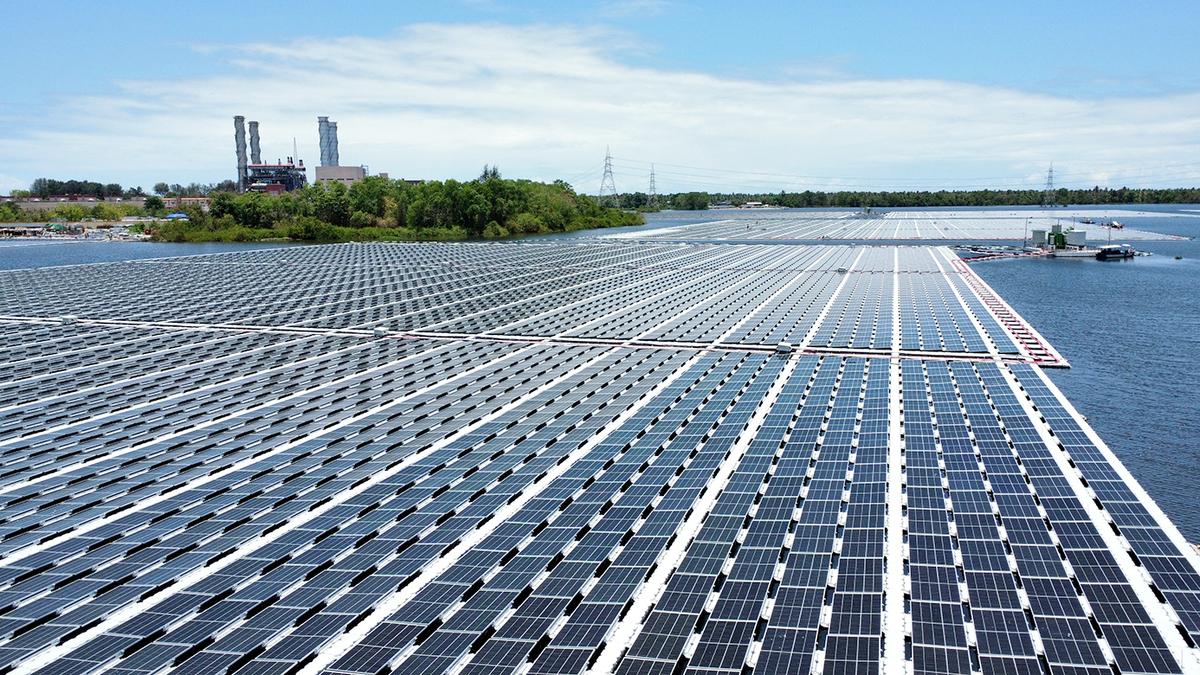
India’s solar story has moved from early adoption to rapid scaling. Yet, as projects get larger, two practical questions increasingly shape the next phase: **where will new solar capacity sit**, and **how will it integrate smoothly with the grid**? Floating solar photovoltaic (FSPV) — solar panels mounted on floating structures over water bodies — is being watched as a constructive answer, especially for regions where land is scarce and competing needs are rising.
Unlike conventional ground-mounted solar parks, floating solar uses the surface of reservoirs, quarry lakes, and other man-made water bodies. India has a large network of dams and reservoirs associated with irrigation and hydropower, creating an opportunity to expand solar capacity without the same level of land acquisition pressure.
What is floating solar, and why it is drawing attention Floating solar systems place solar modules on buoyant platforms, anchored to keep them stable against wind and changing water levels. Electricity is generated similarly to any photovoltaic plant; the main difference lies in the civil and mechanical design needed to handle water dynamics and long-term durability.
The biggest appeal is straightforward: **it can reduce the need for contiguous land parcels**, which are often difficult to secure near demand centres. By shifting some solar capacity onto water bodies, project developers and public agencies can potentially speed up siting and reduce conflicts over land use.
There are also operational advantages that make the concept attractive. Panels positioned over water can benefit from a cooler microclimate, which may help performance compared to panels exposed to higher ground temperatures. In addition, covering parts of a reservoir can reduce evaporation — a feature that can be especially relevant in water-stressed regions, even if the actual impact depends on local climate and the portion of surface covered.
How it can support India’s renewable growth and grid needs Floating solar fits well with **multi-use infrastructure**. Many reservoirs already have transmission connectivity because of hydropower plants nearby. In some locations, this can make power evacuation simpler than building entirely new network links from remote land-based solar sites.
A second advantage is the potential for **hybridisation with hydropower**. Reservoir-based solar and hydropower can complement each other seasonally and daily. Solar generation is strongest during daylight hours, while hydropower can be scheduled more flexibly to balance supply and demand. While this is not the same as battery storage, it can improve dispatch planning and help grids manage variability.
India’s broader clean energy transition increasingly emphasises not only capacity addition, but also **firming and balancing**. As more variable renewables come online, grid operators need tools to smooth supply. Floating solar, when planned alongside hydropower assets and modern forecasting, can contribute to a more manageable renewable mix.
What to watch: costs, environmental care, and execution quality Floating solar is promising, but it is not a universal substitute for land-based solar. The systems require specialised floats, anchoring, and corrosion-resistant components, which can raise upfront costs. Operations and maintenance also need water-safe protocols and trained personnel.
Environmental and community considerations matter. Reservoirs often support fisheries, recreation, drinking water supply, and local ecosystems. Responsible project design includes careful selection of sites, limiting coverage to appropriate portions of the water surface, maintaining water quality safeguards, and ensuring safety for nearby users.
Finally, execution quality will determine outcomes. India’s reservoirs face diverse conditions — fluctuating water levels, monsoon winds, and siltation patterns. Good engineering, rigorous testing of materials, and clear performance standards can help projects deliver reliably over decades.
**Why it matters:** Floating solar can help India add clean energy capacity while easing land constraints, making better use of existing reservoirs and grid links. With thoughtful design and safeguards, it offers a practical pathway to scale renewables in a balanced, resource-efficient way.
