How floating solar could help India scale renewables with less land pressure
As India expands clean energy, floating solar on reservoirs offers a land-sparing path to add capacity while supporting grid needs. With careful design and local coordination, this approach can complement ground-mounted solar and strengthen renewable uptake.
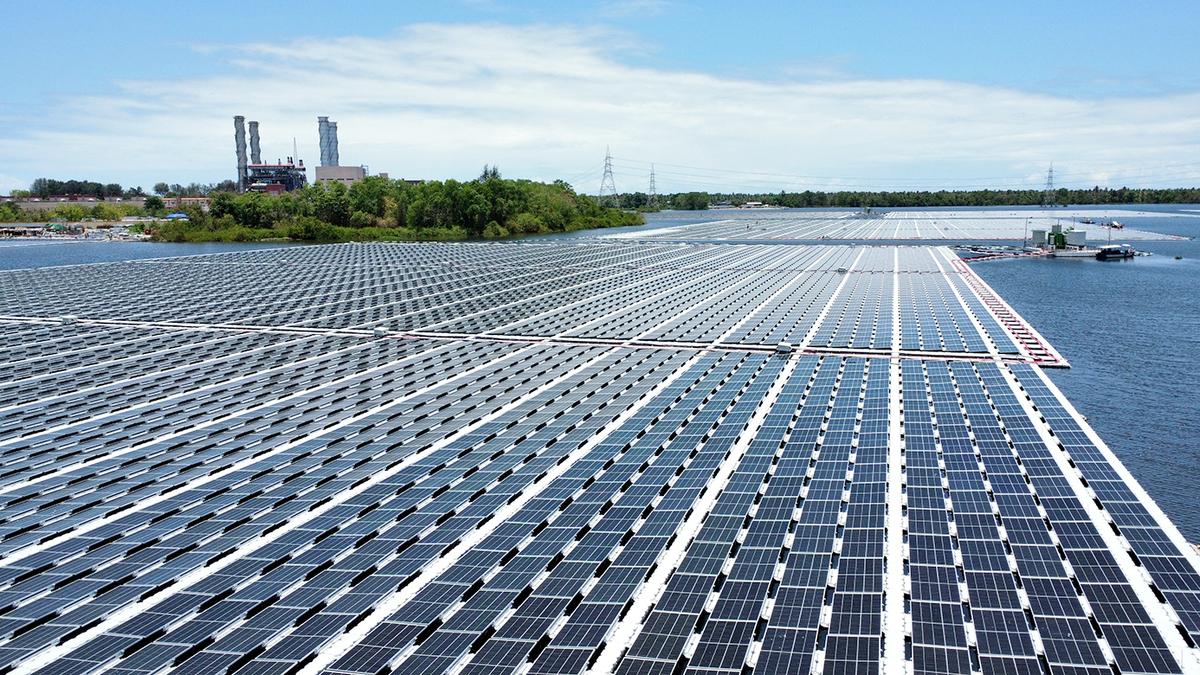
India’s solar story has been one of scale and speed, but the next phase is bringing new practical questions: where will large projects be built, and how will the grid manage higher shares of variable power? One emerging answer is **floating solar**—solar panels installed on buoyant structures over water bodies such as reservoirs.
Floating solar is not a replacement for rooftop or ground-mounted projects. Instead, it is increasingly viewed as a **complementary option** that can help India add renewable capacity while easing land-related constraints, especially in areas where acquiring contiguous parcels is difficult.
What is floating solar, and why are reservoirs in focus? Floating solar (often called floating PV) involves mounting photovoltaic panels on modular floats anchored to the bed or banks of a water body. The electricity is transmitted to shore through cables, much like conventional solar plants.
India is looking closely at **large reservoirs** because they offer expansive surfaces that are already dedicated to public infrastructure. In many cases, these are associated with dams and hydropower facilities, creating opportunities to co-locate generation and use existing transmission corridors.
A key attraction is straightforward: **land is increasingly scarce and contested**. Utility-scale solar requires space, and siting can involve trade-offs with agriculture, settlements, and biodiversity. Reservior-based projects can reduce pressure on land by making use of underutilised water surfaces—while still needing careful planning to ensure navigational, ecological, and community considerations are respected.
There are also potential operational advantages. The cooling effect of water and reduced dust in some settings may support more stable panel performance, though outcomes vary by location and design. Additionally, partial coverage of a reservoir can help **reduce evaporation**, a benefit in water-stressed regions—provided coverage levels are managed to avoid harming aquatic ecosystems.
Benefits—and the engineering and environmental checks required The promise of floating solar comes with a clear set of design and governance needs.
On the benefits side, floating projects can:
- **Reduce land acquisition complexity**, especially near urban and industrial demand centres.
- **Pair well with existing power infrastructure** around dams and reservoirs.
- Potentially **improve system planning** when integrated with other generation sources.
However, floating solar is also an engineering project in a dynamic environment. Developers must account for changes in water levels, wave action, wind loads, corrosion, and long-term maintenance access. Robust anchoring and safety systems are essential, as is regular inspection.
Environmental assessment is equally important. Reservoirs support fisheries, local livelihoods, and biodiversity. Responsible projects typically avoid excessive surface coverage and incorporate measures to protect water quality, aquatic life, and shoreline habitats. Transparent consultation with local communities and reservoir authorities helps ensure that benefits are shared and risks are managed.
How floating solar fits India’s next renewables push As renewable penetration increases, India’s power system is focusing more on **reliability and flexibility**—including better forecasting, grid upgrades, and storage. In this context, floating solar can play a useful role as part of a broader portfolio that includes rooftop solar, ground-mounted solar parks, wind, and hybrid projects.
Reservoir-based solar can be particularly relevant where energy planners are looking to add capacity without expanding the land footprint. It can also support a more balanced clean-energy build-out by locating generation closer to existing substations and transmission lines.
The big takeaway is that floating solar is best seen as a **strategic addition** rather than a silver bullet. Where sites are suitable and environmental safeguards are strong, it can help India keep building renewables at pace—while navigating the real-world constraints that come with scale.
**Why it matters:** Floating solar can help India expand clean power while easing land pressures, using reservoirs more efficiently, and strengthening the reliability-focused next phase of renewable growth.
