A policy roadmap to help build India’s next 10 lakh entrepreneurs
A new framework, “Building India’s Next 10 Lakh Entrepreneurs”, proposes a National Entrepreneurship Mission that connects existing startup, MSME, research and credit schemes. The goal is simpler pathways, stronger support systems, and wider participation across regions and sectors.
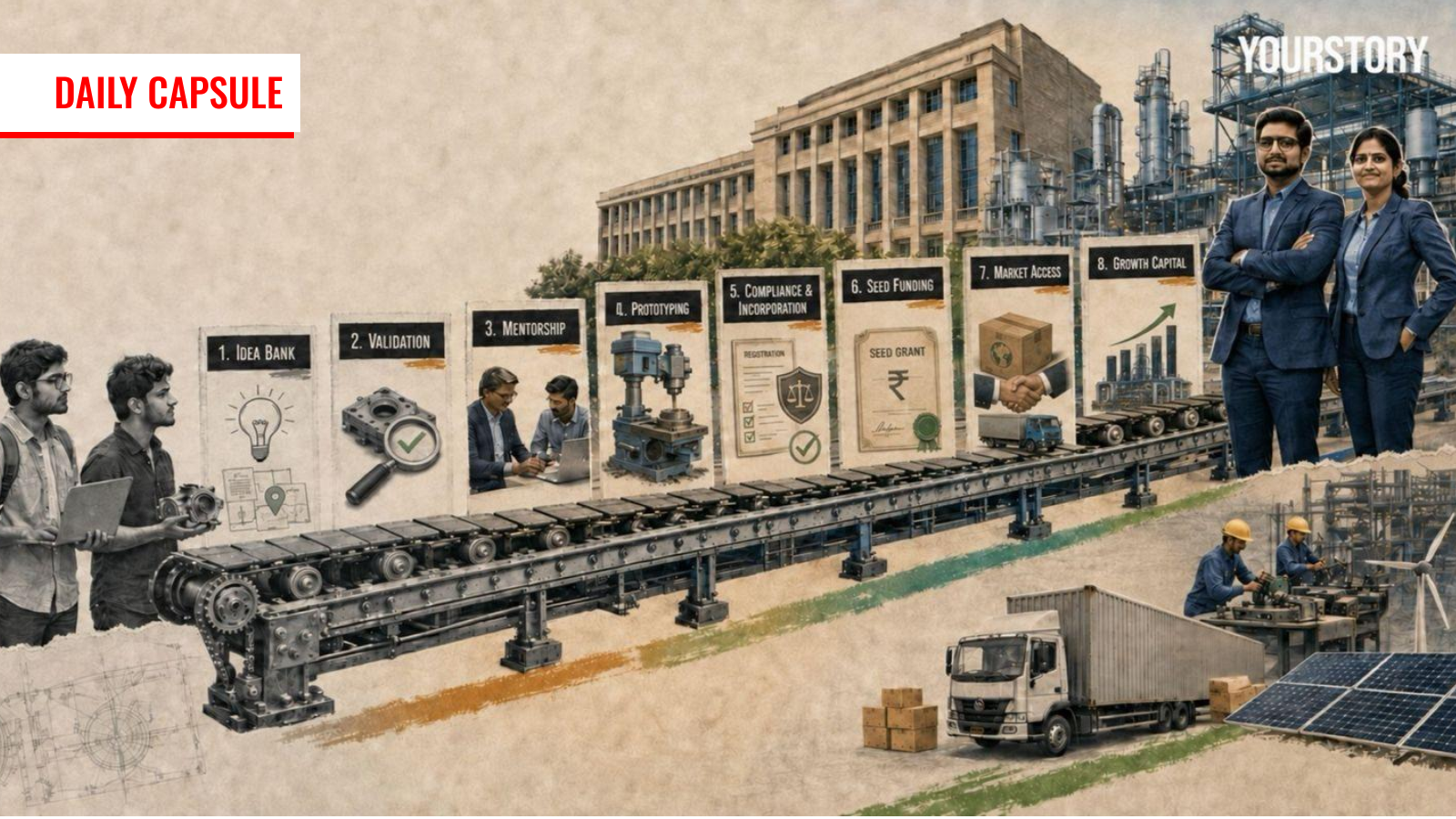
India’s entrepreneurial energy is visible—from home-grown startups to resilient MSMEs and deep-tech research teams. Yet many aspiring founders still face a familiar set of hurdles: fragmented information, uneven access to mentors and markets, and a funding journey that can feel complex.
A new policy framework titled **“Building India’s Next 10 Lakh Entrepreneurs”** proposes a **National Entrepreneurship Mission** designed to connect the ecosystem India already has—spanning **startup support, MSME programmes, research pathways and credit schemes**. The core idea is practical: instead of building everything from scratch, align and simplify what exists so that more people can start and sustain businesses.
A National Entrepreneurship Mission that connects the dots The framework’s most constructive promise is coordination. India runs multiple initiatives across ministries and institutions—often well-intentioned and impactful, but not always easy to navigate for first-time founders. A Mission approach can help by creating clearer on-ramps for entrepreneurs depending on their stage and sector.
This could include:
- **A single, easy-to-understand journey map** for founders—what to do at ideation, validation, early revenue, and scale-up stages.
- **Stronger bridges between startups and MSMEs**, recognising that innovation and manufacturing/services depth can grow faster when both segments collaborate.
- **Tighter links between research and enterprise**, making it easier for labs and academic institutions to translate applied ideas into market-ready products.
- **Better visibility of credit and support options**, so founders can choose the right instrument—grant, loan, guarantee-backed credit, or partnership—without losing months to confusion.
Importantly, the framework focuses on connecting existing schemes rather than creating parallel structures. For founders, that can mean fewer dead ends and more predictable support.
Ten ways to create 10 lakh entrepreneurs: a practical playbook While “10 lakh entrepreneurs” is an ambitious target, the pathway can be grounded in actionable steps that improve access, reduce friction and widen participation. Based on the framework’s emphasis on alignment across startup, MSME, research and credit ecosystems, here are ten constructive directions such a Mission can prioritise:
1. **One discoverable national gateway** for entrepreneurship information, updated regularly and designed for first-time users. 2. **District- and city-level onboarding** through local institutions (incubators, industry bodies, colleges), making support reachable beyond metros. 3. **Mentorship at scale**, with structured programmes that match founders with domain experts, operators and finance professionals. 4. **Easier compliance and formalisation support**, especially for micro and small businesses transitioning from informal operations. 5. **Startup–MSME collaboration tracks**, encouraging pilots, procurement partnerships and co-creation—particularly in manufacturing, supply chains and services. 6. **Research-to-market bridges**, helping innovators with IP awareness, product validation and early customer discovery. 7. **Credit awareness and readiness**, including help on documentation, cash-flow planning and suitable borrowing choices. 8. **Inclusive entrepreneurship pathways** for women, youth and first-generation founders through targeted outreach and community-led support. 9. **Market access and procurement enablement**, so new ventures can find their first customers—public and private—faster. 10. **Outcome-focused measurement**, tracking what matters (sustainable businesses, jobs, revenues, survival rates) rather than only inputs.
None of these require hype; they require coordination, clarity and consistent implementation—exactly what a Mission-mode framework aims to deliver.
A growth opportunity for Bharat’s next wave of founders A connected entrepreneurship architecture can unlock meaningful second-order benefits: stronger local supply chains, more formal jobs, and innovation that addresses Indian needs in healthcare, agriculture, education, climate resilience and digital public infrastructure.
If executed well, a National Entrepreneurship Mission could also encourage more founders to build from Tier 2 and Tier 3 cities, where costs are lower, talent is abundant and local problem statements are clear. The emphasis on linking startups with MSMEs and research channels can further strengthen India’s ability to move from ideas to scalable products and services.
**Why it matters:** By connecting existing startup, MSME, research and credit schemes into a clearer founder journey, India can reduce friction for first-time entrepreneurs, broaden participation across regions, and accelerate job-creating, innovation-led growth.
