Tagbin’s Brixx turns text prompts into 3D building designs for faster BIM workflows
Indian startup Tagbin has built Brixx, an AI platform that converts plain text inputs into 3D building designs. The company is approaching large enterprises first, positioning the tool to speed up BIM generation, support cost estimation and simplify compliance processes.
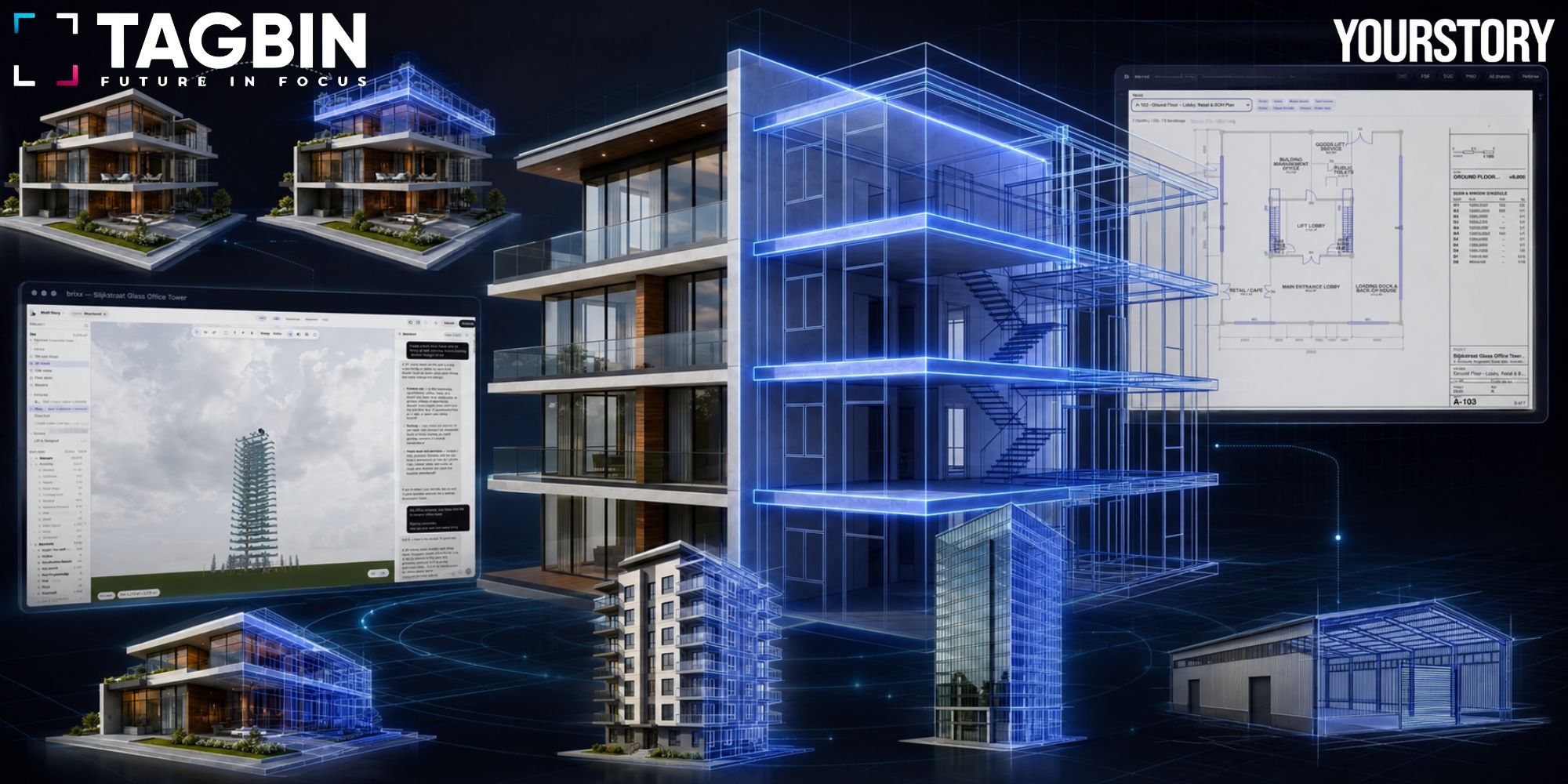
Tagbin, an Indian startup known for building technology-led experiences, has developed an AI platform called **Brixx** that can turn written prompts into **3D building designs**. The company says it is taking the product to **large enterprises first**, where structured workflows and scale can help demonstrate clear time and productivity gains.
In a sector where early-stage design iteration can be slow and coordination-heavy, tools that reduce friction at the concept stage are increasingly valued. Brixx aims to make the first draft of a design easier to create—using words as the starting point.
From words to 3D: a new front-end for BIM Brixx is positioned as an AI-powered pathway to faster **BIM (Building Information Modelling)** generation. In practical terms, BIM is not just a 3D model—it is a digital representation that can carry information relevant to planning, construction, and operations.
By allowing users to describe a requirement in natural language and receive a 3D design output, the platform seeks to reduce the gap between an idea and a workable model. This can be useful for architects, engineering teams, and project stakeholders who need a quick visual and structural starting point before detailed planning begins.
Tagbin’s approach reflects a broader shift in design and engineering: using AI to accelerate the “first 60%” of work—initial drafting, early alternatives, and basic alignment—so teams can spend more effort on validation, refinement, and high-impact decision-making.
Enterprise-first focus: speed, estimates, and compliance support According to the company, Brixx is being taken to **large enterprises first**, with a promise of **faster BIM generation**, **cost estimation**, and support for **regulatory compliance**.
This enterprise-first route makes sense in construction and infrastructure, where organisations often operate across multiple sites, contractors, and approval stages. If early design cycles and documentation can be compressed, projects can potentially move through internal reviews and pre-construction readiness more smoothly.
The mention of cost estimation is especially relevant. In many projects, early estimates can vary widely because they depend on assumptions and evolving design scope. A workflow that ties design outputs to more structured modelling could help teams produce quicker, more consistent early numbers—while still leaving final budgeting to detailed engineering and on-ground realities.
Similarly, compliance support—when presented as a workflow aid—can be constructive. Regulations and codes vary by context, and enterprises routinely handle checklists, approvals, and documentation. Tools that can help organise outputs for review, reduce rework, and maintain traceability can improve governance without turning compliance into an afterthought.
A constructive sign for India’s built-tech ecosystem Brixx adds to India’s growing set of startups working at the intersection of **AI, design, and industrial productivity**. Construction remains one of the largest employment and investment sectors, and even incremental digital improvements—faster modelling, fewer revisions, cleaner documentation—can add up across large portfolios.
For enterprises, the near-term value could lie in speed and standardisation. For the ecosystem, the opportunity is longer-term: nurturing homegrown tools that can serve Indian conditions and workflows, and potentially travel well to other markets with similar needs.
**Why it matters:** AI-led platforms like Brixx can help teams move from concept to structured models faster, potentially improving coordination, early estimation and compliance readiness—supporting more efficient delivery in India’s expanding construction and infrastructure landscape.
